Works omitted from Ceroni by Osvaldo Patani
Amedeo Modigliani — investigation file
Osvaldo Patani (died 2013/2014) was an Italian scholar who published a three-volume Catalogo Generale of Modigliani’s paintings, drawings, and related material with Leonardo Editore in Milan between 1991 and 1994. He listed approximately 349 paintings. Relative to Ambrogio Ceroni’s 337 entries, this represented the addition of roughly two dozen works and the exclusion of about ten that Ceroni had accepted. Patani presented the catalogue as the product of nearly forty-five years of careful research, restricted to works with solid bibliography and pedigree in a market flooded with well-made fakes.
In practice the catalogue largely followed Ceroni’s framework and inherited many of its limitations. Secretmodigliani.com notes that the same factual problems found in Ceroni—incorrect supports, measurements, and dating—reappear in Patani, often without independent correction. A partial review of the 1898–1914 section alone identified mistakes in 37 of 55 entries. The volumes contain little explicit critical apparatus explaining why individual works were accepted or rejected; judgments are presented as the result of long study rather than as documented arguments open to inspection. Patani also omitted any systematic engagement with Lanthemann’s catalogue.
Patani’s position in the field was further complicated by his relationships with other experts. He was accused in the early 1990s by Christian Parisot of publishing fake drawings; the charge was not firmly sustained, and the two later collaborated on “scientific committees” associated with Parisot’s projects. His name appears in auction catalogues and literature mainly as supplementary documentation. Major houses continue to treat a Ceroni number as the practical threshold for top-tier sales; a work carrying only Patani’s opinion does not reach those floors. The catalogues themselves have become scarce.
A recent Italian case illustrates the limits of his authority. A caryatid drawing included in Patani’s catalogue of drawings and sculptures was later declared a fake by the Laboratorio del Falso at Roma Tre University and confiscated by a Venetian court. Patani had accepted it without reservation; technical examination reached the opposite conclusion. The episode is consistent with the broader assessment that his catalogue, while more restrained than Lanthemann’s or Parisot’s, does not function as an independent or reliable revision of the oeuvre. It remains a secondary, derivative listing whose market utility is confined to works already endorsed by Ceroni.
Published drawings CR / Paintings CR / Sculptures CR. His main success was the Paul Alexandre collection publications.
Listed 349 paintings. In his cat. we find the same mistakes as Ceroni, so he gives his word as good with no questioning.
Accused in 1991of publishing fake drawings (but never condemned firmly) by Parisot that later was condemned for the same.
Patani later collaborated with Parisot. Identical case as MR who had earlier made a similar accusation against Parisot.
T o read more about him and bibliographyclick here >
----
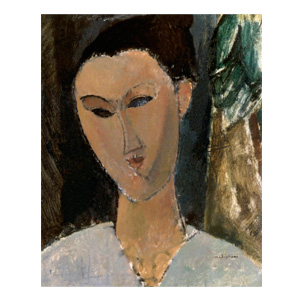
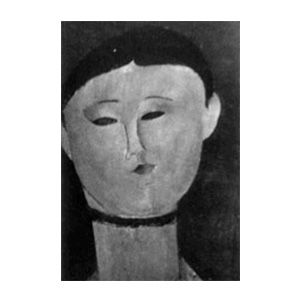
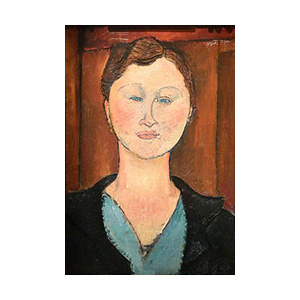
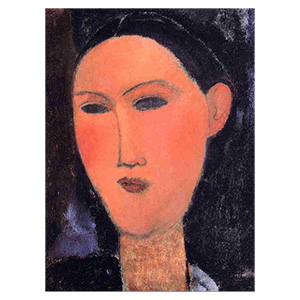
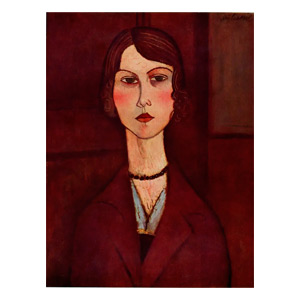
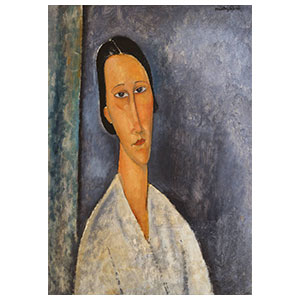
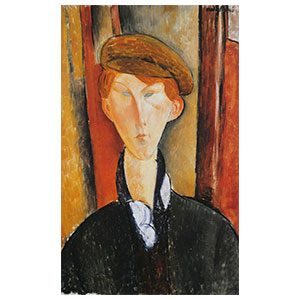
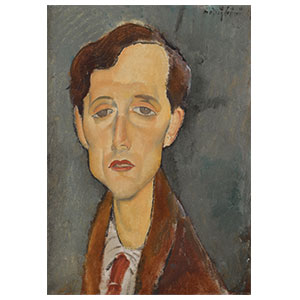
This are the works he take out of Ceroni's catalogue (this means = considered by him as not by Modigliani)
The omissions are recorded as published by Patani; inclusion here is documentary.
| ||||||||||||||||||||||||||||



Legal note on MR: This investigation has not had access to MR’s catalogue raisonné; all research here is based on open sources, publications and exhibitions. By no means has that catalogue been copied at any point.